


Author: Site Editor Publish Time: 2025-09-15 Origin: Site


Infrared paint curing can help a small workshop heat a repair area without warming an entire oven. Its usefulness depends on the coating, substrate and equipment. A shorter heating stage is only a benefit if the coating still reaches its specified cure and the part remains undamaged.
Check the coating manufacturer’s technical data sheet before choosing a lamp. Some systems permit infrared drying; others require a different cure mechanism or a particular sequence. “Dry to touch,” “ready to sand” and “fully cured” are different endpoints.
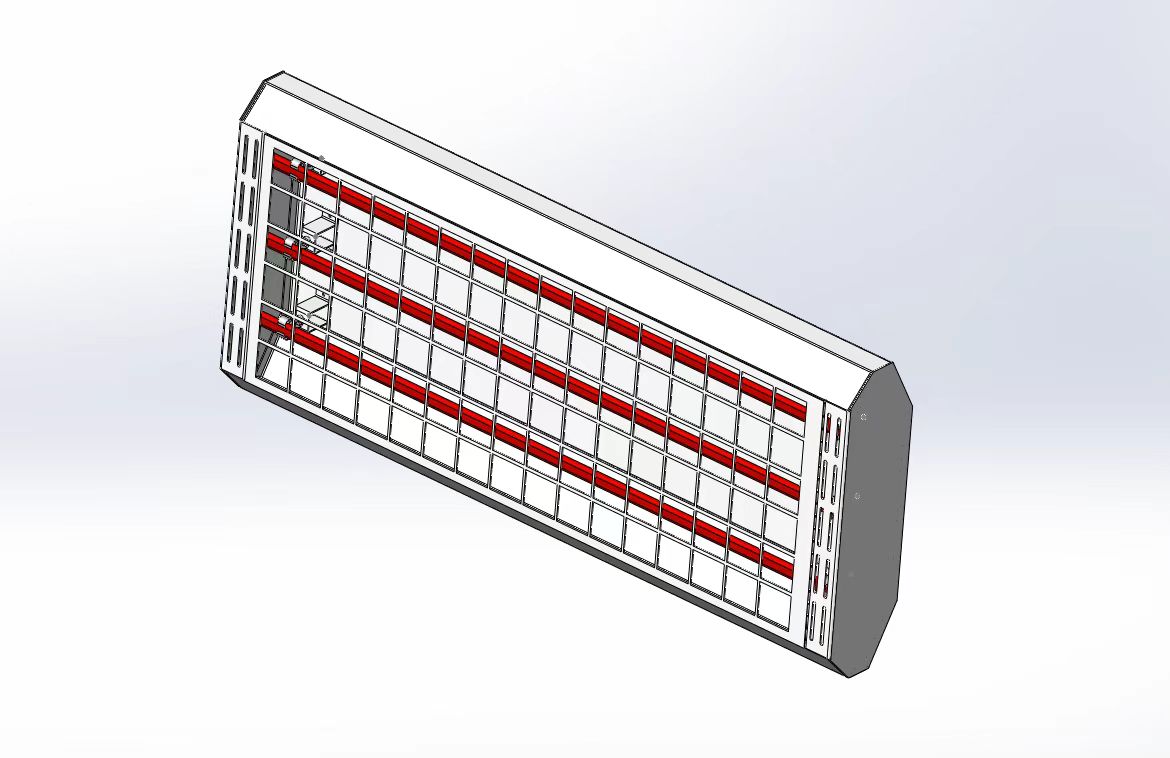
Module design illustration. A bare industrial module is not a complete ready-to-use DIY curing appliance.
| Potential benefit | What must be checked |
|---|---|
| Local heating | The repair area must fit within the equipment’s effective heating footprint. |
| Responsive control | The controller, sensor and emitter must work together; lamp response alone does not set part temperature. |
| Flexible workflow | Include preparation, flash-off, heating, cooling and inspection in the complete cycle. |
| Reduced energy per job | Measure electricity and auxiliary equipment against an equivalent accepted finish. |
There is no universal percentage saving. Part size, coating thickness, idle time, ventilation and the previous process all affect the result. A lamp does not remove dust, eliminate preparation work or automatically prevent coating defects.
Confirm the exact primer, filler, basecoat or clearcoat and the approved infrared schedule. Infrared supplies heat; it does not replace UV exposure for a UV-curable coating or change a two-component mixing requirement.
Metals can spread heat into surrounding areas. Plastics may distort, and wood can lose moisture or move. Use the lowest applicable limit for every layer, adhesive and adjacent component. Validate a representative test piece before processing the actual part.
A workshop dryer includes the support, reflector, guards, wiring and controls. YFR industrial emitters are components that require appropriate equipment integration. Similar wattage does not establish that two complete dryers or replacement lamps are interchangeable.
Allow the coating’s specified flash-off before applying the full heating stage. Raising power too early can close the surface and trap volatile material. Hedson’s curing guidance explains why solvent release and the later bake stage require different control.
Use the equipment manufacturer’s working distance and aiming instructions. Record the actual part temperature using a suitable measurement method; reflective surfaces can make infrared thermometer readings misleading. Do not copy a single distance or temperature from a different coating, lamp or substrate.
Keep the required ventilation operating. Heating does not make solvent vapours harmless. Use equipment suitable for the work area and coating, and stop if temperature control, guarding or ventilation is unreliable.
Record coating name and batch, mix and film thickness, substrate, flash-off, lamp position, heating time, measured temperatures and cooling time. Inspect gloss, adhesion and the coating supplier’s stated cure criteria. Repeat the accepted procedure on a second representative part before treating it as a repeatable setting.
For industrial process detail, see paint drying control and defect prevention and short-wave infrared lamps.
No. Compatibility and the required cure mechanism come from the coating supplier.
Only within a validated schedule. Excessive heating can damage the substrate or worsen solvent-related defects.
Not by itself. It requires a compatible, protected installation and appropriate electrical and thermal controls.
Compare usable coverage, temperature feedback, support and guarding, approved coating schedules, service parts and measured full-cycle results.
Last updated: September 7, 2026

